Summerlee Foundation Awards Grant for Depot Restoration

One of the museum's most iconic and treasured pieces will soon receive a much-needed exterior restoration. The Summerlee Foundation of Dallas has graciously awarded $20,000 towards repainting our 125-year-old Houston & Texas Central Depot.
The structure began life in Dallas and has endured at least two moves since initially serving as a yard office at the south end of Southern Pacific's Yard near today's I-30. It's years on the H&TC (an early subsidiary of SP) are somewhat sketchy, but date back to at least 1900. The H&TC was the first railroad to reach Dallas and North Texas, arriving from Houston in 1872. Interestingly, the venerable depot has nearly surpassed the number of years as a museum piece as when it was in service on the railroad.
The Summerlee funds will go towards prepping and painting the depot's exterior – a very labor-intensive project. The wood building has a large overhanging roof, with an open soffit and decorative braces for support. This type of roof has large expanses of wood, requiring extensive work overhead. The exterior walls are made entirely of wood, mostly douglas fir drop siding with decorative trim. Work will be in accordance with U.S. Department of Interior standards.
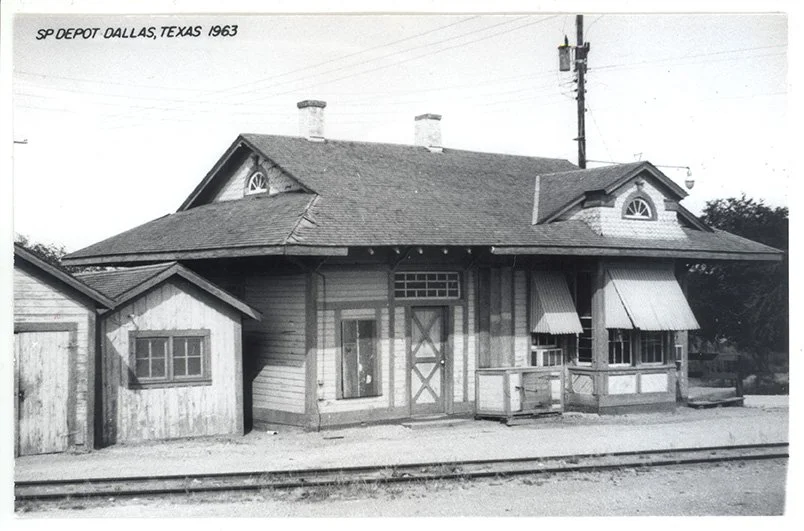
This image of the Museum's H&TC depot was captured just months before it was moved to Fair Park in 1963. It made way for construction of "The Canyon," a below-grade alignment for Interstate 30 on the southern side of downtown Dallas. The depot was originally located on Eakin Street at the throat to Southern Pacific's yard in Dallas. The photo is by H. D. Connor, a local photographer that captured images of depots throughout Texas, Oklahoma, and other states throughout the 1960s and 1970s. His collection now resides in the DeGolyer Library Special Collections at SMU.
The depot was built to a standard H&TC plan which allowed for variances in size depending on need. Ours features an agent's office, waiting room, and medium size baggage room. It was designated a Texas Landmark Structure in 1976. It was the subject of an entertaining and enlightening investigation on an episode of PBS’s History Detectives in 2003. A comprehensive architectural survey of the depot was conducted in 2005. The H&TC depot is an important surviving example of late nineteenth-early twentieth century railroading in Texas.
The depot was moved to Fair Park in 1963, weeks before it was slated for demolition to make way for Interstate 30 construction. It served as a centerpiece at the museum until 2011 when it was moved to Frisco. The structure was too tall to negotiate the designated route from Fair Park to Frisco, so the entire roof was carefully removed and later reassembled at its new location. This was a painstaking process, requiring each piece to be labeled and reinstalled at its original position. Fortunately, the depot retains its state landmark designation due to the context in which it is presented. The depot continues to be a vital attraction within the museum, serving thousands of visitors and school groups.

With its roof carefully removed piece by piece, the depot is transferred to moving beams and bogies for the trip to Frisco. In this view in Dallas' Fair Park, the bois d'arc piers can be seen in the foreground, which provided a foundation for the depot for nearly 50 years. H. D. Snow & Son of Fort Worth did an outstanding job of relocating the historic structure, a trek that took the better part of 10 hours. My, we have come a long way since then! We're excited to begin restoration thanks to the Summerlee Foundation.
The Summerlee Foundation was created in 1988 to support the preservation of Texas history and animal protection initiatives. They have contributed to museum capital projects over the years, including facilities construction in Frisco. Summerlee also provided much-needed operating support to the museum during COVID. They continue to make a measurable and meaningful difference in our ability to serve the community. Our sincere thanks for Summerlee's commitment to historic preservation in Texas.
This latest grant allows the museum to fully fund the anticipated scope of work on one of the oldest and storied railroad structures in North Texas. It will be combined with an initial gift of $5,000 from the Katherine Shultz Charitable Trust. Her gift was made in memory of Garl B. Latham, a long-time friend of the museum.
We Try Harder
Maintaining Relevance & Value in our Community

One of the biggest challenges we face as a railroad museum is maintaining relevance. More specifically, how do we get past the perception of being simply a quaint collection of old trains? It has been an ongoing priority in our messaging and programming for many years. It's not unique to our museum and will likely always require trying harder with our marketing, fundraising, and meeting expectations in the community.
At the heart of this is our educational value. Railroads literally built this great nation, and they are still the backbone of our economy. What better story to tell than the role of this industry in every aspect of life – the settlement of a nation, commerce, spread of cultures, technology, politics, global logistics, and yes, our history. These stories are baked into our collection just waiting to be told. They go beyond history to embrace the role of railroads in the context of today's world, including the importance of a multimodal transportation infrastructure, STEM content, and career paths to the industry for future generations.
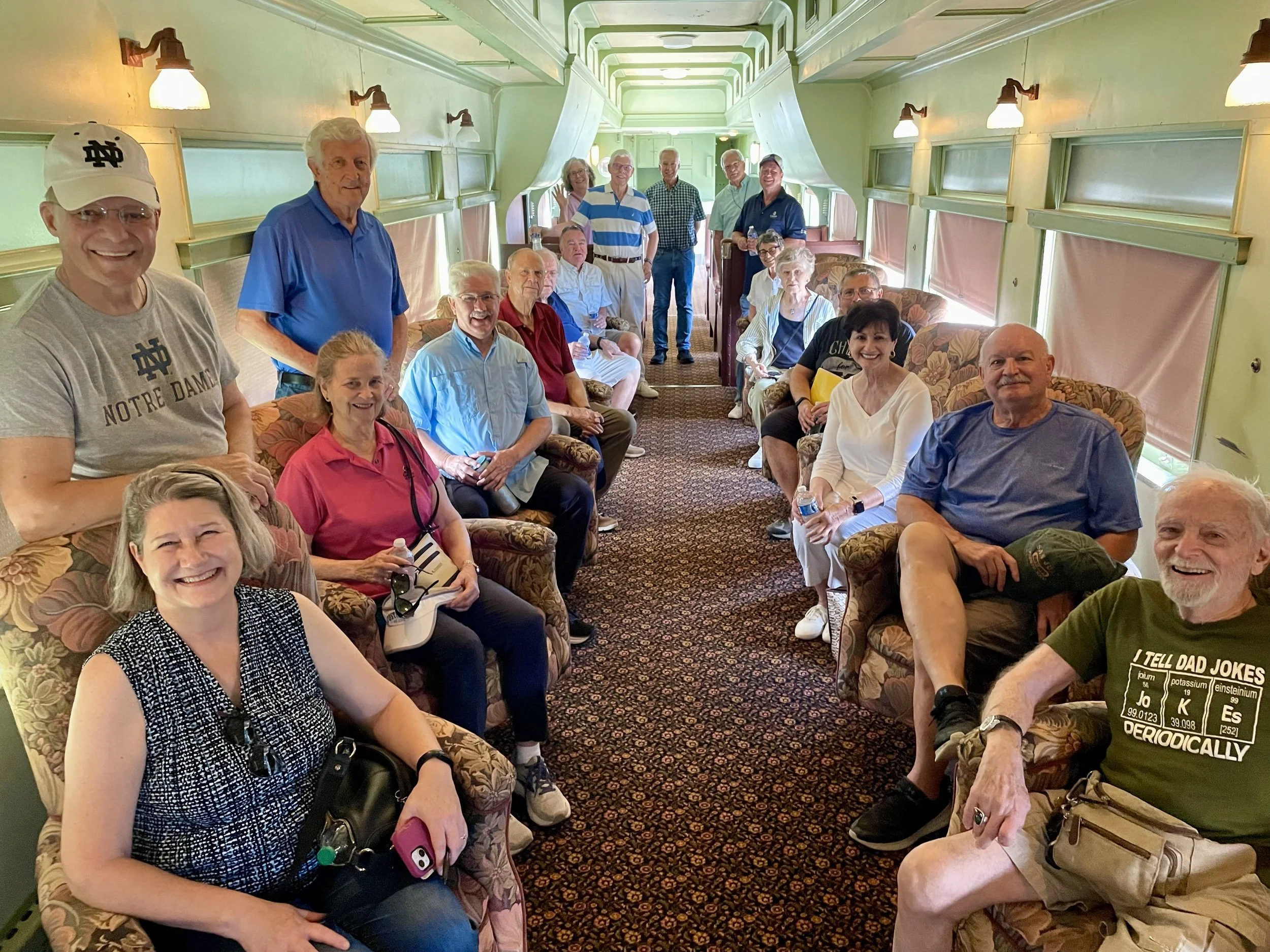
The Museum is proud to serve local universities in various capacities. Here, participants in Collin College's SAIL program pose during a museum tour and lecture on the Transcontinental Railroad.
The Museum of the American Railroad has led the way in many aspects of interpreting its collection and utilizing each piece as an educational resource. And it continues to be a fully integrated approach, including working closely with school administrators and curriculum planners, following Texas educational standards, building relationships with teachers, seeking support from funders, and getting feedback from our most precious resource - students.
Every year, we grow our educational programs and expand our reach in North Texas. Our core audience remains Frisco ISD third and seventh grade field trip programs. With the potential to serve 43 elementary schools and 18 middle schools, our days are full during the school year. Last year, we welcomed Staley Middle School students, a Title 1 school, thanks to a grant from Astound Communications’ Grande Cares project. As an older mostly minority school in the heart of Frisco, we value the relationship we've built with Staley’s principal and teachers. Our Frisco high school-level Ethnic Studies Program returns for a fourth year, celebrating the accomplishments of Pullman Porters and the rise of the black middle class.
Even more encouraging is our growing reach to other districts including gifted and talented programs. Among them is Birdville ISD, Celina ISD, and Education in Action, a program at Lone Star Leadership Academy. They are returning after a hiatus during COVID and we couldn't be more thrilled.
As we roll out new and improved interactive third grade programming for the 2025-2026 academic year, we are proud to continue our tradition of great educational offerings. Stemming from our days serving Dallas schools and DART's transit education program, we've greatly expanded our reach, taking advantage of our new home in Frisco at the epicenter of growth in North Texas.
And finally, we will stay loyal to our history and social studies roots, placing emphasis on adding context to a generation bombarded with the “here and now”. We learn from history – our successes and our failures.
Getting back to our relevance, the Museum of the American Railroad strives to employ conventional and cutting-edge approaches to educational experiences beyond the classroom. These are based on state TEKS standards, and each program is updated regularly. The reward for us (our board, staff, volunteers, stakeholders, and funders), is seeing a new generation more enlightened and engaged from the great American stories we share.
All Things Pullman
It's hard to believe that one hundred years have passed since travel by rail hit its peak in the U.S. In 1925, the railroads were taking delivery of new passenger cars and inaugurating additional trains to meet increasing demand. That year is considered the pinnacle of rail travel before the automobile began to be a staple in every American household.
Here at the Museum of the American Railroad, we're celebrating the centennial of a few notable pieces in our collection – rare survivors of that grand era of travel. Two of our Pullman sleeping cars hit the 100-year mark this summer – “McQuaig” and “Glen Nevis”. Both cars began life at Pullman’s 111th Street Shops in Chicago and joined a growing fleet of nearly 10,000 sleeping cars.

A freshly painted Pullman Glen Nevis shows off its original scheme during National Train Day at Dallas Union Station in 2008. It once provided first-class accommodations on Seaboard Air Line's Orange Blossom Special from New York to Florida. It was also used on Adlai Stevenson's campaign train while campaigning for President in the 1950s. Glen Nevis had a second life with FreightMaster Industries, a subsidiary of Haliburton, which manufactured draft gear cushion devices for the railroad industry. Following conversion in 1966, the car served as a rolling testbed, with computer monitoring of buffet and shock action on couplers equipped with their draft gear cushions. Still painted in Haliburton's red and white, it was donated to the museum in 1997 following retirement.
These cars are treasures in our collection. They survived the Great Depression, World War II troop movements, the postwar boom, and the scrapper's torch. They are tangible evidence of our nation's history. They are cultural assets, representing a way of life in affluent America while a class struggle was quietly taking place aboard their first-class accommodations. These cars transported passengers comfortably to their destinations, while moving the Porters who staffed them out of poverty and into the middle class. Their stories abound as visitors walk through the corridors of these iron and steel conveyances.

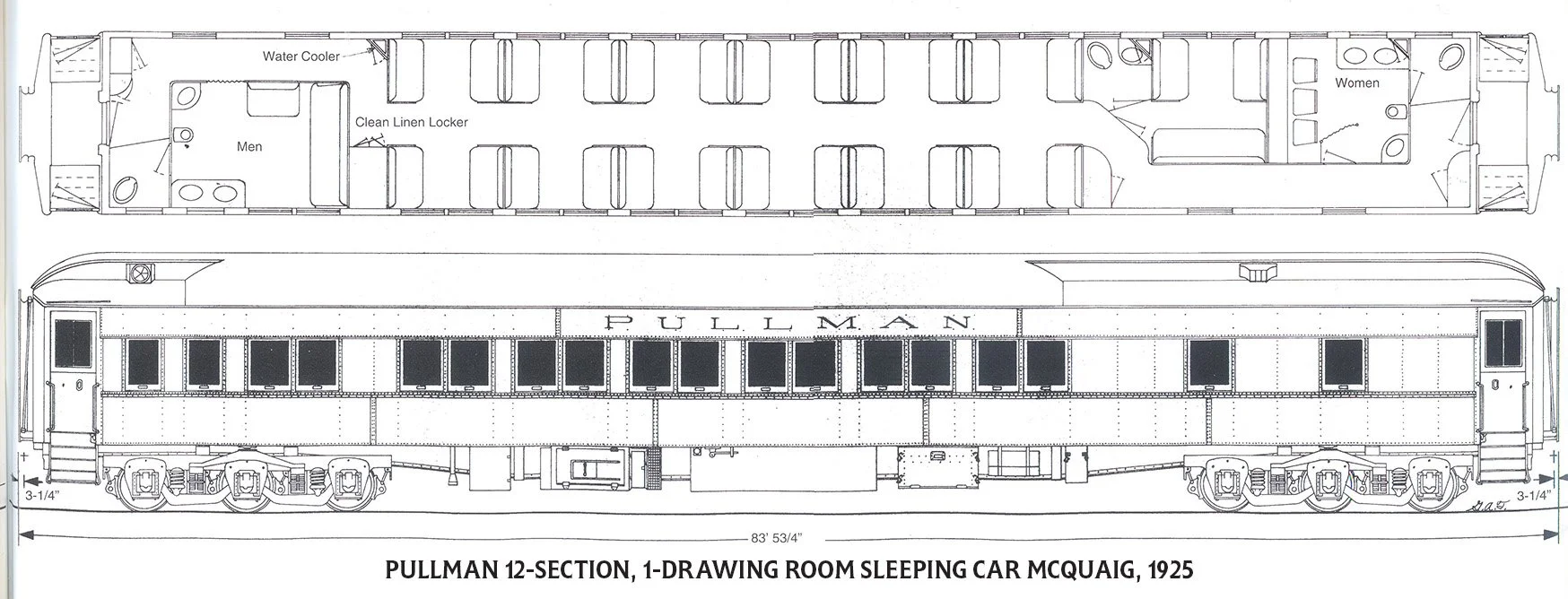
The above two views show the McQuaig's interior today. The 12-1 sleeping car has arguably the most intact, original interior in existence. It shares the same floorplan as the Museum's Goliad sleeping car which is a year younger. This was the most popular arrangement, having twelve open sections and one first-class drawing room. This floorplan made up the majority of Pullman's 10,000-car fleet.
The museum rosters ten Pullman-built products, including four sleeping cars. They make up the core of our collection. With an average age of 105 years, many are entering their second century as museum pieces. They are in desperate need of conservation and protection from the elements. In the coming months, we will reveal our exciting plans for preservation and presentation of the museum's rolling stock collection including these priceless pieces.
2025 Marks 100 Years of BSCP

Another important centennial is celebrated this year. It was 100 years ago that the Brotherhood of Sleeping Car Porters was formed, the first African American labor union in the U.S. Pullman Porters organized in 1925 to improve working conditions and pay. This was an important development that improved the lives of African Americans and led to other Civil Rights initiatives. The BSCP was merged into BRAC, the Brotherhood of Railway and Airline Clerks in 1978. The accomplishments of BSCP live on as a result of the efforts of so many members throughout the decades. The legacy of Pullman Porters is an integral part of our nation's rail heritage. At left are members of BSCP Local #1 in Oakland, California in 1925.